Well-planned outdoor wedding ideas combine a beautiful natural setting with a dependable weather plan, comfortable guest facilities and a timeline built around changing light. Working with an experienced Indian wedding photography team also helps protect cultural rituals, family moments and portraits when wind, rain or delays affect the day.
Key Takeaways
- Choose a venue with safe access, useful facilities and a covered backup space.
- Plan for wind, heat and cold as carefully as rain.
- Arrange the ceremony and reception around guest comfort, sound and movement.
- Coordinate photography and videography before finalising the timeline.
- Give one trusted person authority to activate the weather plan.
Choose a Venue That Works in Every Condition
Practical outdoor wedding ideas start with choosing a venue that works in both good and poor weather. The setting may look impressive, but it must also accommodate the guest count, ceremony structure, catering, toilets, power, transport, and emergency access.
Compare Outdoor Wedding Venue Ideas Before Booking
Strong outdoor wedding venue ideas balance appearance with function. Use this table during site visits.
| Venue Feature | What to Check | Why It Matters |
| Covered space | Capacity, heating, lighting and setup time | Keeps the event running in poor weather |
| Ground | Drainage, slopes, mud and pathways | Protects guests, clothing and equipment |
| Facilities | Toilets, parking, shade and accessibility | Improves comfort for every age group |
| Power and sound | Outlets, generators and noise limits | Supports music, speeches and catering |
| Privacy | Public access, roads and nearby events | Reduces interruptions and background noise |
| Supplier access | Loading areas and pack down rules | Helps vendors work without crossing guest areas |
A venue should remain practical even if the weather changes or parts of the celebration need to move.
Visit the venue at roughly the same time of day as your planned ceremony. The sun may shine directly into guests’ eyes, disappear behind trees, or create uneven shadows across the ceremony area.
During the visit:
- Stand where the couple will be positioned.
- Check the view from the final guest row.
- Listen for traffic, aircraft, and nearby events.
- Walk from the parking area to the ceremony space.
- Inspect the covered alternative.
- Confirm mobile reception and power access.
These checks can reveal problems that may not be obvious during an earlier or later site visit.
Check Permissions and Site Requirements
Public spaces may have rules for music, alcohol, temporary structures, and vehicle access. Private properties may require temporary toilets, generators, additional lighting, or waste removal.
Confirm these requirements before booking suppliers or finalising the layout.
Build a Weather Plan Before Choosing Decorations
A clear weather plan should be in place before furniture, flowers, and styling are finalised. New Zealand conditions can change quickly, and a backup arrangement only works when everyone knows where the event will move, who makes the decision, and when that decision must be made.
Use a detailed wedding planning checklist to record the outdoor and covered layouts, supplier responsibilities, contact details, and decision times.
Set a Clear Weather Decision Time
Agree on a decision time with the venue, planner, and key suppliers. Furniture, sound equipment, flowers, and other items may need several hours to relocate safely.
Give one trusted person authority to approve the change. The couple should not need to answer supplier questions while getting ready.
Make the Backup Space Feel Intentional
A covered alternative should accommodate every guest and support the ceremony, lighting, and sound requirements.
Where possible, prepare key styling elements for both locations. This makes the backup space feel like part of the wedding plan rather than a last-minute replacement.
Plan Outdoor Wedding Ceremony Ideas Around Comfort and Visibility
Effective outdoor wedding ceremony ideas prioritise sightlines, sound, safe movement, and guest comfort before decoration. Guests should be able to hear the ceremony, see important rituals, and reach their seats without crossing processional routes or photography positions.
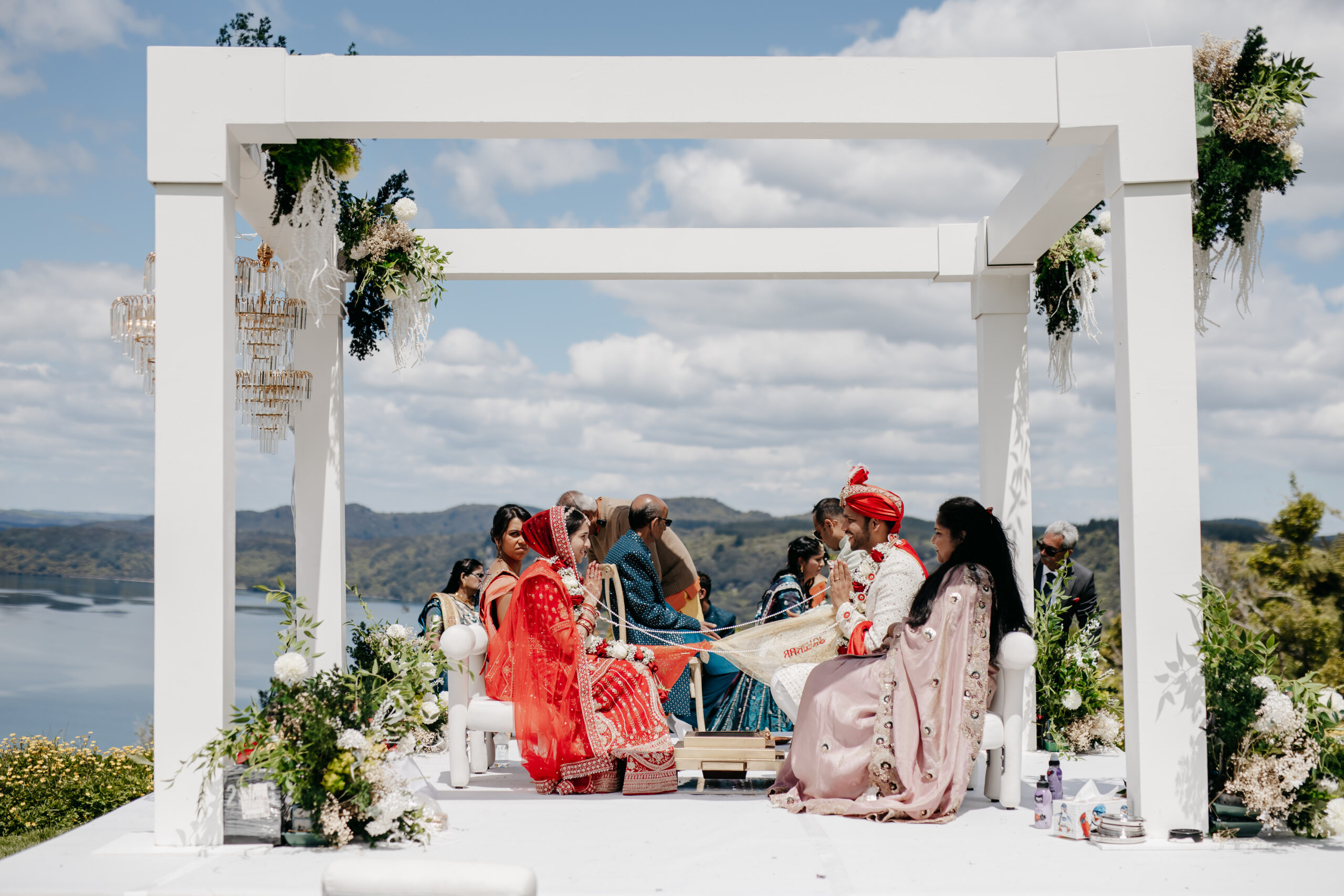
Indian, Sri Lankan, Muslim, and fusion weddings may also require space for a mandap, Poruwa, musicians, sacred items, family seating, and several entrances.
Create a Stable Ceremony Walkway
Useful outdoor wedding walkway ideas include timber paths, secured woven matting, fitted flooring, or existing stone paths. Loose rugs can curl, catch footwear, or become slippery when placed over damp or uneven ground.
Allow enough width for:
- Couples walking with parents
- Cultural processions and musicians
- Large dresses, veils, and traditional clothing
- Older relatives and mobility aids
- Photographers working without blocking guests
The walkway should support both ceremonial movement and safe access.
Position the Ceremony Carefully
Avoid harsh midday sun when suitable shade is available. Uneven lighting can leave one person in direct sun while another remains in deep shadow.
Use microphones even for smaller gatherings. Wind, surrounding activity, and nearby traffic can make vows difficult to hear beyond the first few rows.
Brief the Visual Team on Cultural Moments
Share the ceremony order with the photography and video teams before the wedding. Experienced Indian wedding videography can preserve vows, chanting, music, and family reactions while photographers document expressions, rituals, and important details.
Include:
- The ritual order
- People involved in each stage
- Sacred space requirements
- Planned entrances and exits
- Moments that cannot be repeated
- Surprise performances or traditions
Advance information helps the team prepare without interfering with the ceremony.
Plan Outdoor Wedding Reception Ideas Around Guest Flow
Practical outdoor wedding reception ideas make it easy for guests to move between dining, speeches, dancing, toilets, and sheltered areas. Suppliers also need clear service routes that do not interrupt formal moments.
Arrange the Main Reception Areas
Place the dance floor on stable, well-lit ground and make sure speeches are visible from most tables.
A simple event order may include:
- Guest arrival
- Couple’s entrance
- Meal service
- Speeches
- Performances
- Cake cutting
- Dancing
- Final farewell
The layout should support this sequence without repeatedly moving guests between distant areas.
Use Outdoor Wedding Decorating Ideas That Suit the Setting
Effective outdoor wedding decorating ideas work with the existing landscape rather than trying to cover it. Focus styling on areas guests will notice most, such as the ceremony structure, entrance, dining tables, and dance floor.
Choose weighted signs, enclosed candles, and stable centrepieces. Avoid loose paper decorations, tall narrow arrangements, and lightweight frames that can move in windy conditions.
Plan Lighting for the Evening
Useful outdoor night wedding ideas include festoon lighting above dining areas, pathway lighting near steps, and suitable lighting around speeches and dancing.
Ask the venue and videographer whether decorative lighting will provide enough visibility after sunset. Lighting should support both atmosphere and safe movement around the site.
Coordinate Outdoor Photography and Videography Early
Photography planning is another important part of successful outdoor wedding ideas. The location, travel time, weather, and available natural light can affect portraits, family photographs, ceremony coverage, and the reception entrance.
Lionbeats offers coordinated wedding photography and videography packages for single-day and multi-day celebrations.
Plan Portraits Around Available Light
Late afternoon often provides softer light than midday, but hills, trees, buildings, and surrounding landscapes can block the sun earlier than expected.
Ask the photographer to assess the specific location instead of planning solely around the published sunset time. The outdoor photography planning advice explains how timing, comfort, and changing conditions can affect photographs and film.
Prepare Two Portrait Locations
Choose one preferred outdoor portrait location and one sheltered option nearby. A veranda, conservatory, large window, or covered garden may allow portraits to continue during light rain.
Couples researching pre-wedding photoshoot ideas for outdoor locations can also use their pre-wedding session to test walking routes, outfits, and posing comfort before the main celebration.
Allow Extra Time Between Major Moments
Add around ten to fifteen minutes around major transitions where practical. Outdoor celebrations can involve longer walks, footwear changes, moving older relatives, or repositioning equipment.
Planning for wedding photos in bad weather can also help couples prepare sheltered locations, clear umbrellas, suitable footwear, and flexible portrait timing.
Choose Outdoor Wedding Outfit Ideas for the Setting
Outdoor wedding outfit ideas balance appearance with the temperature, wind, ground conditions, and planned activities. Clothing and footwear should allow the couple and wedding party to move comfortably between different areas of the venue.
Useful items may include:
- Block heels or heel protectors for softer ground
- Wraps or additional layers for cooler conditions
- Veil weights for windy locations
- Sunscreen for exposed venues
- Garment covers
- Comfortable backup footwear
- A small clothing repair kit
Check the venue surface before deciding on footwear, particularly when the ceremony or portraits involve grass, gravel, or sloping ground.
Follow a Step-by-Step Outdoor Wedding Planning Process
The best outdoor wedding ideas become easier to manage when decisions are made in a clear order. Start with the practical requirements, then add styling and smaller details once the venue and weather plans are confirmed.
- Set the guest count, wedding format, and preferred season.
- Shortlist venues with suitable facilities and shelter.
- Visit each venue at the planned ceremony time.
- Confirm permissions, noise limits, and supplier access.
- Create both outdoor and covered layouts.
- Book photography, film, catering, and key suppliers.
- Build the ceremony and reception timeline.
- Confirm power, toilets, lighting, and accessible pathways.
- Share the final run sheet with suppliers and key family members.
- Recheck the forecast and follow the agreed weather plan.
This order keeps practical decisions from being overshadowed by décor or other details too early in the planning process.
Conclusion
Well-planned outdoor wedding ideas give New Zealand couples the beauty of a natural setting without leaving weather, comfort, or important moments to chance. The strongest plans combine a suitable venue, reliable shelter, safe movement, and a realistic schedule.
Confirm the backup arrangements early, plan the ceremony and reception around guests, and coordinate the photography timeline with the actual conditions at the venue. These preparations allow the celebration to remain organised even when the weather changes.
Contact us by calling +64 21 213 5288 or request a personalised quote for your wedding. We only take a limited number of bookings yearly to ensure we provide quality services.
Frequently Asked Questions
Is an Outdoor Wedding Suitable for New Zealand Weather?
Yes, when the venue has reliable shelter and a clear weather process. Confirm the covered capacity, set a decision time, and appoint one person to approve the move so suppliers can adjust the layout without involving the couple.
Does an Outdoor Wedding Need an Indoor Backup Venue?
A reliable covered backup is strongly recommended. It should accommodate every guest, support the ceremony layout, and provide sufficient lighting, power, and sound rather than sheltering only the couple and wedding party.
Can Cultural Wedding Ceremonies Be Held Outdoors?
Yes, when the site can accommodate sacred structures, family seating, musicians, processions, and supplier positions. Share the ritual order early and confirm how wind, fire requirements, footwear, and privacy will be managed.
Is Sunset Always the Best Time for Outdoor Wedding Photos?
No. Hills, trees, and buildings may block sunlight before the published sunset. The photographer should assess the venue and schedule portraits around the light that actually reaches the chosen location.
Can Wedding Photos Still Look Good in Rain?
Yes. Rain can create softer light, richer colours, and reflective surfaces when the team has suitable equipment and sheltered alternatives. Prepare clear umbrellas, practical footwear, and two portrait locations so short breaks in the weather can be used safely.